
Tag Assignment Tool
Target users
Pluralsight is a technology learning platform that has thousands of pieces of content (video courses, assessments, labs, etc.) that need to be linked to Pluralsight’s taxonomy where users can find it on the website.
The problem: tagging content was a difficult dull process that was hard to get teams to adapt to when adding content to the platform. If content wasn’t tagged properly users couldn’t find the content they were looking for on Pluralsight’s app.
We needed a quick way for Pluralsight teams to tag new content as it gets into the library, as well as back-tag existing content that wasn't linked to the taxonomy.
Through my research we determined we needed a web application that Pluralsight teams could access as they added content to the library that would us AI recommend tag names based on content information that they could easily select to add to their workflow.
Problem statement:
Client: Pluralsight
Pluralsight team members from the curriculum creation team.
Tech savvy individuals that know how to add content to the platform.
Product Goals
Create a web application Pluralsight team members can use to back-tag and future tag all content to Pluralsight’s taxonomy.
Create a product that is easy to understand, easy to use, and works with AI technology to suggest tags to ensure proper tagging.
Create a fun gamified experience to change tagging from a boring task to a fun one to create tool adaption.
My role
Lead designer and user researcher for the product. I lead all the design on a team of 4 software engineers, a product manager, and a senior data scientist that I collaborated with daily. I created all wireframes, mockups, and prototypes and conducted all user interviews and synthetization of user research for the product.
My design process
Research & Define
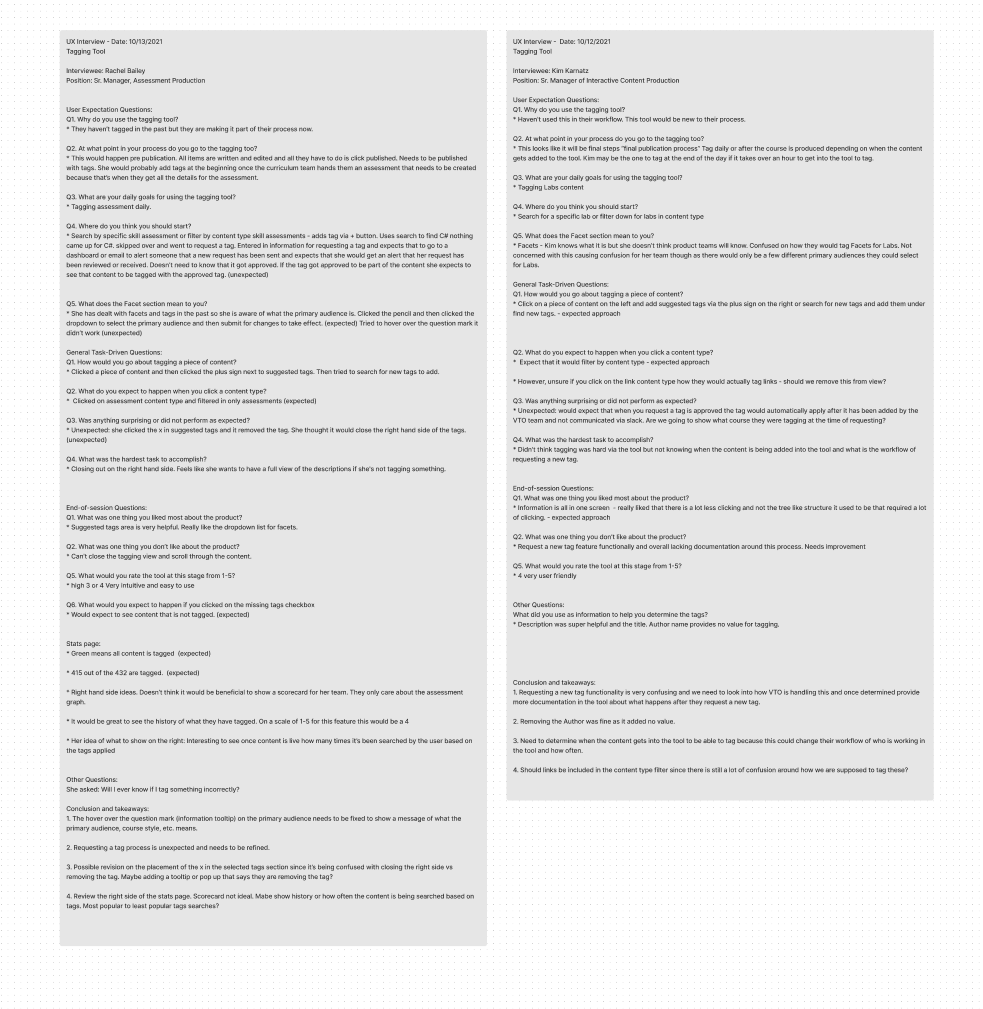
Before starting on the designs, I started to gather generative research by setting up user interviews with our core users to get a better understanding of what problem we were trying to solve, pain points, and general user research.
Empathize with the user
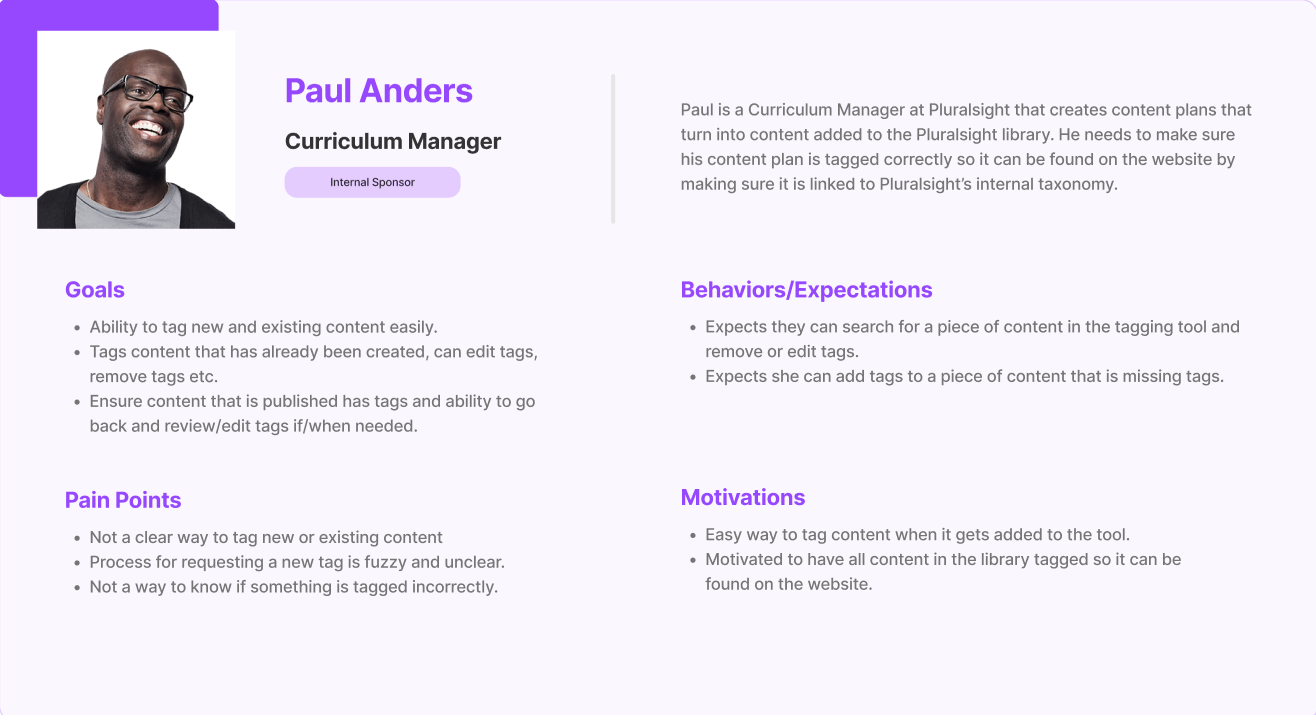
After conducting user interviews I started creating the persona for our core user the Curriculum Manager.
Ideate
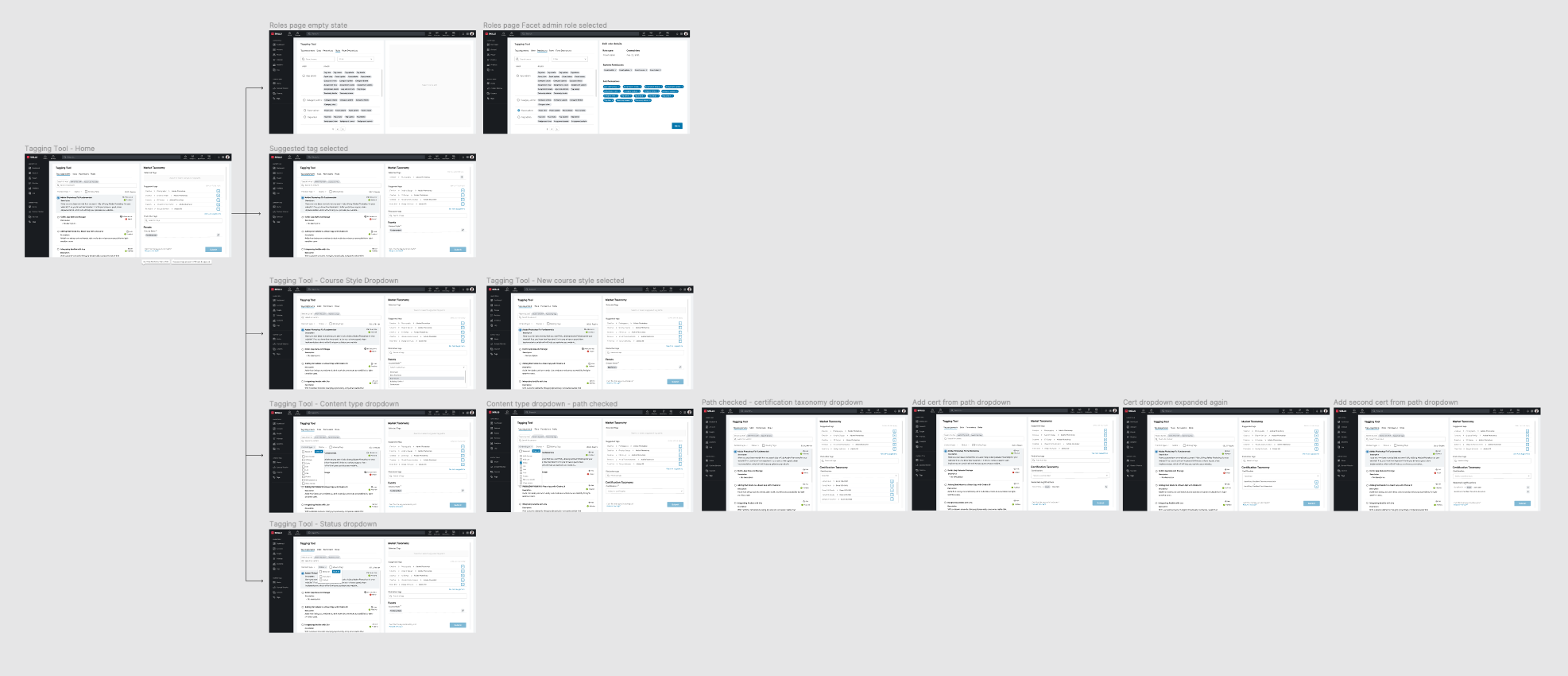
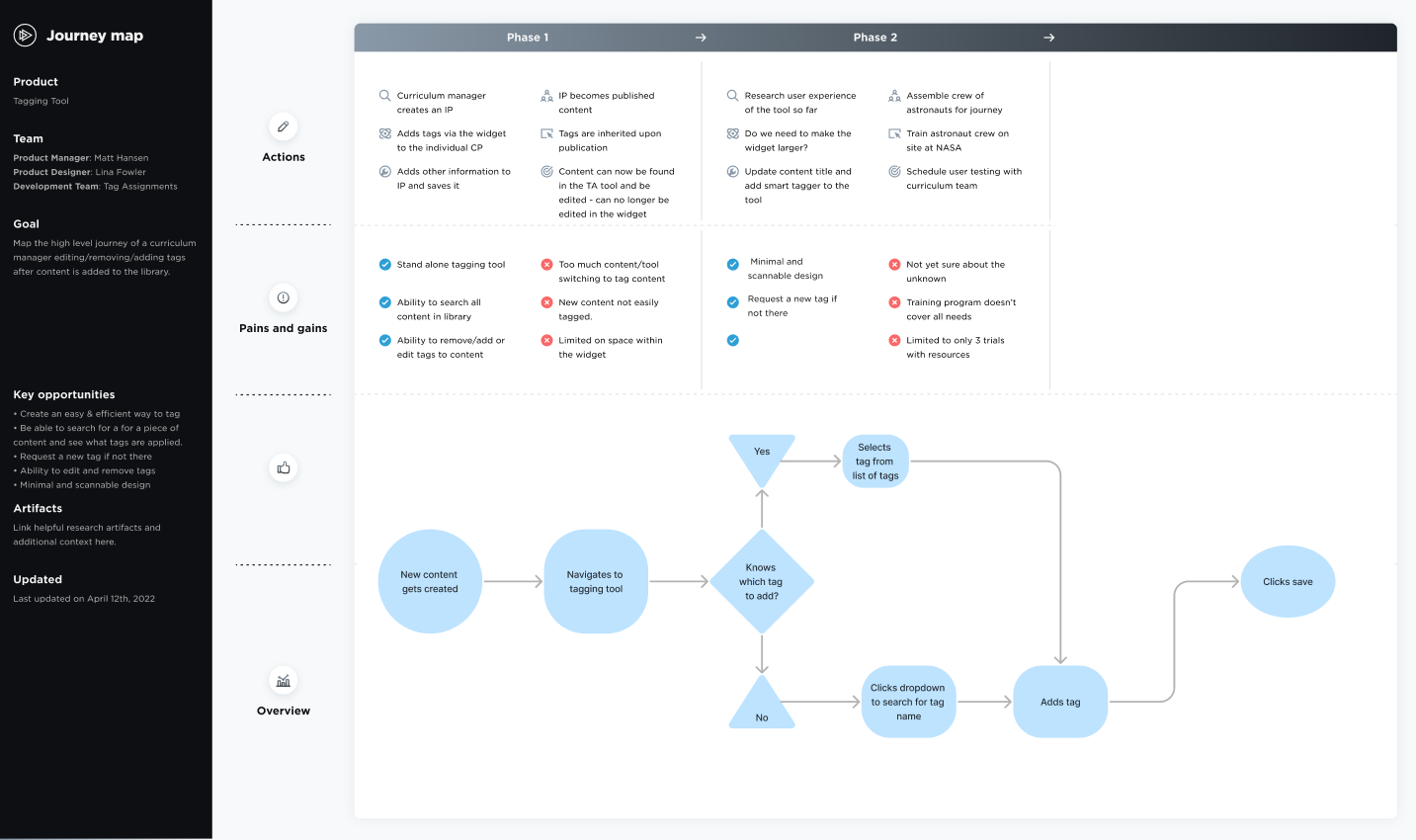
Once the first round of research was gathered I created user flows and journey maps to get a better understanding of how to approach the design. I also started created low fidelity mocks to play around with different layouts, etc.
Design
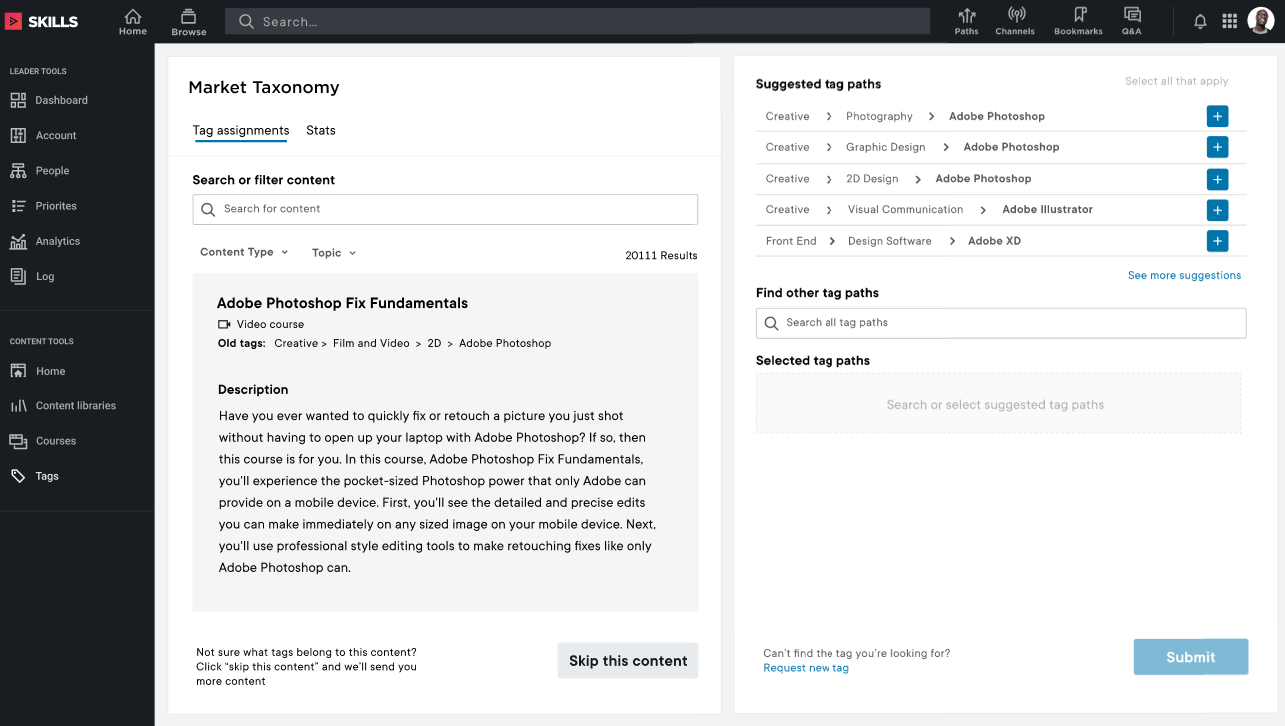
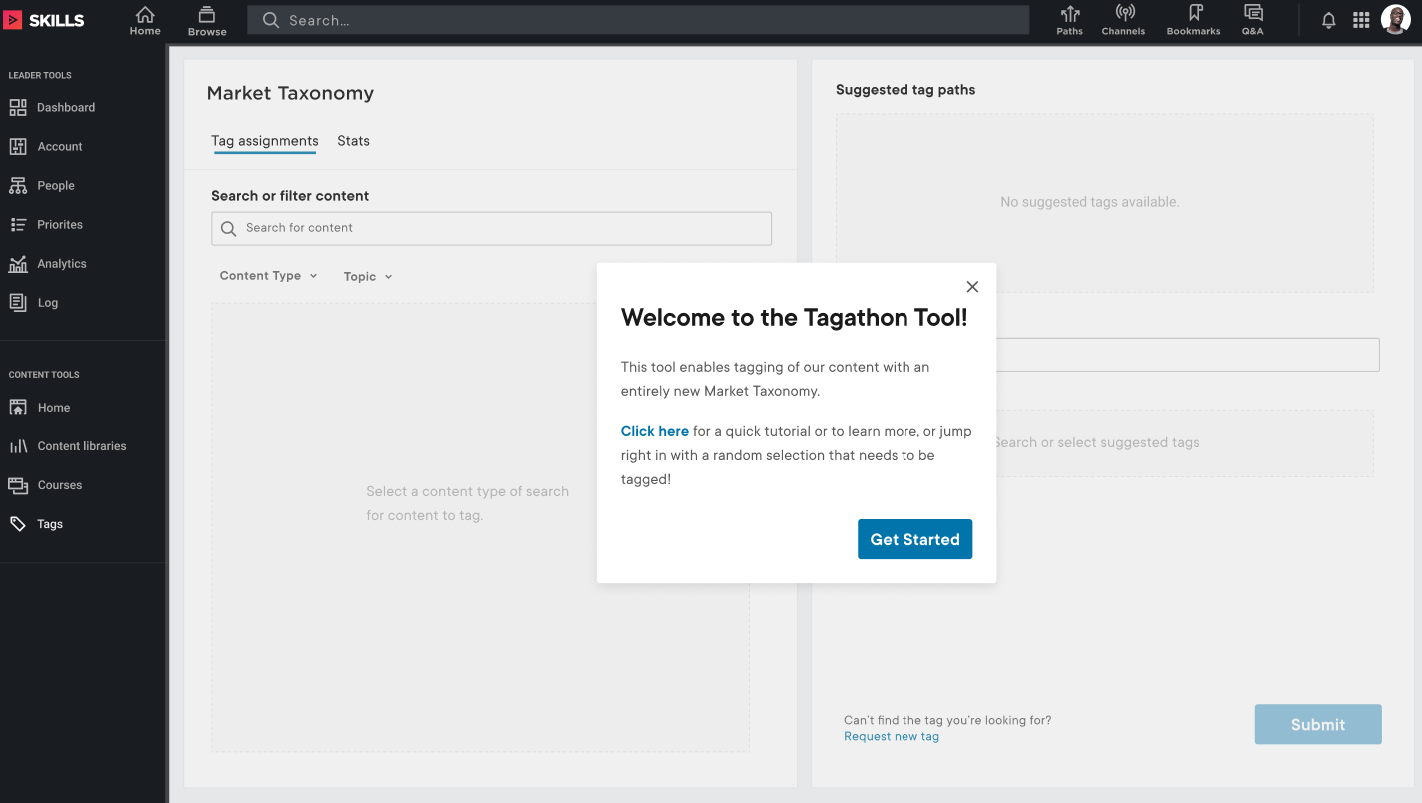
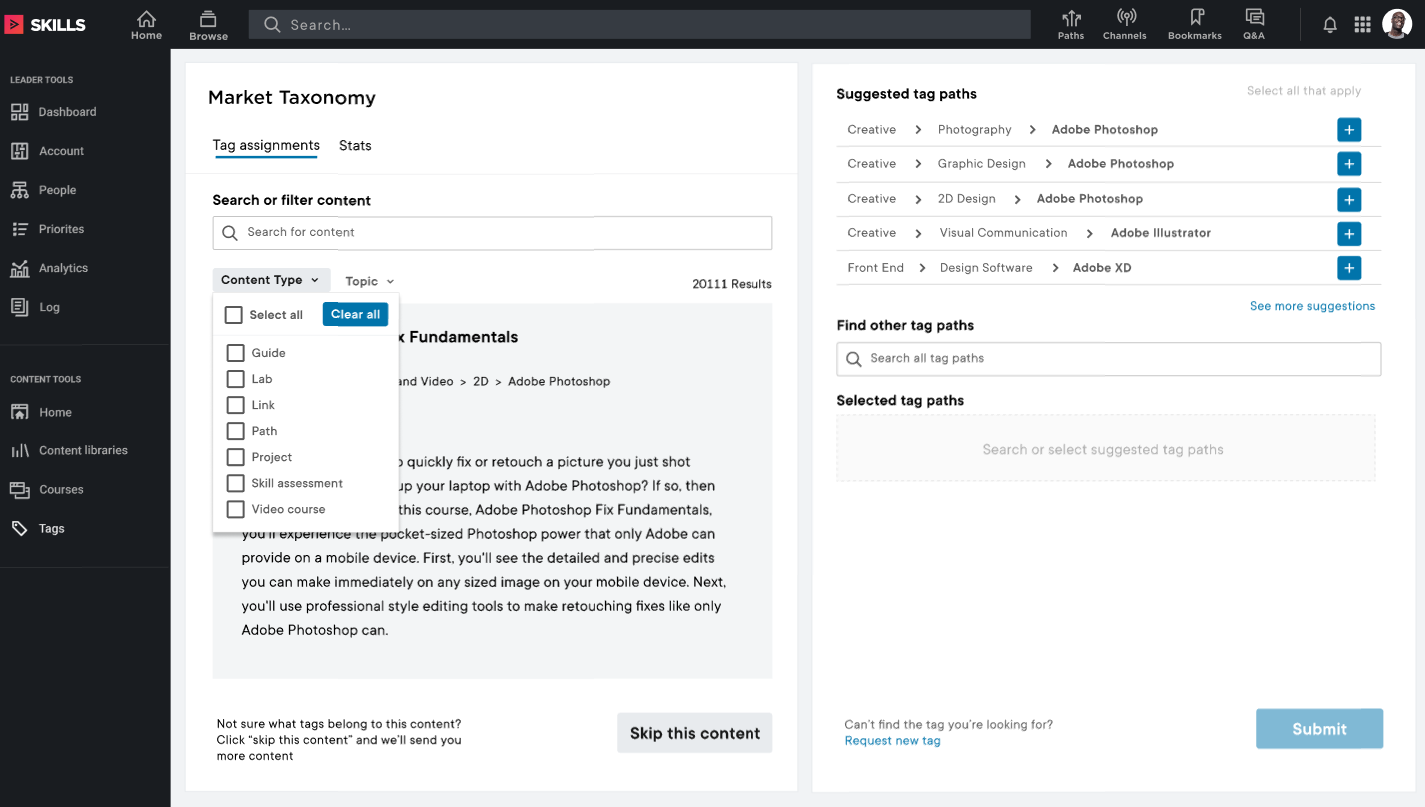
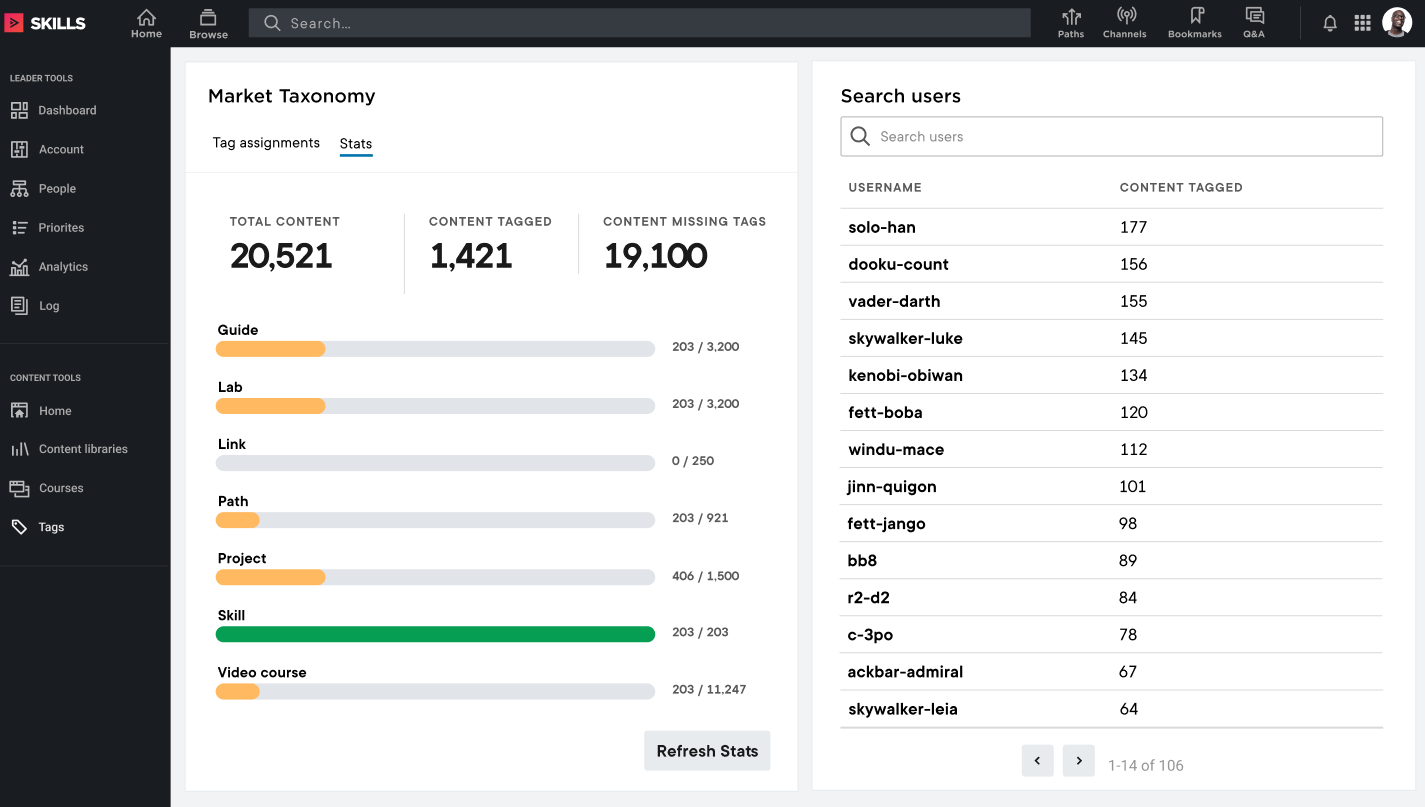
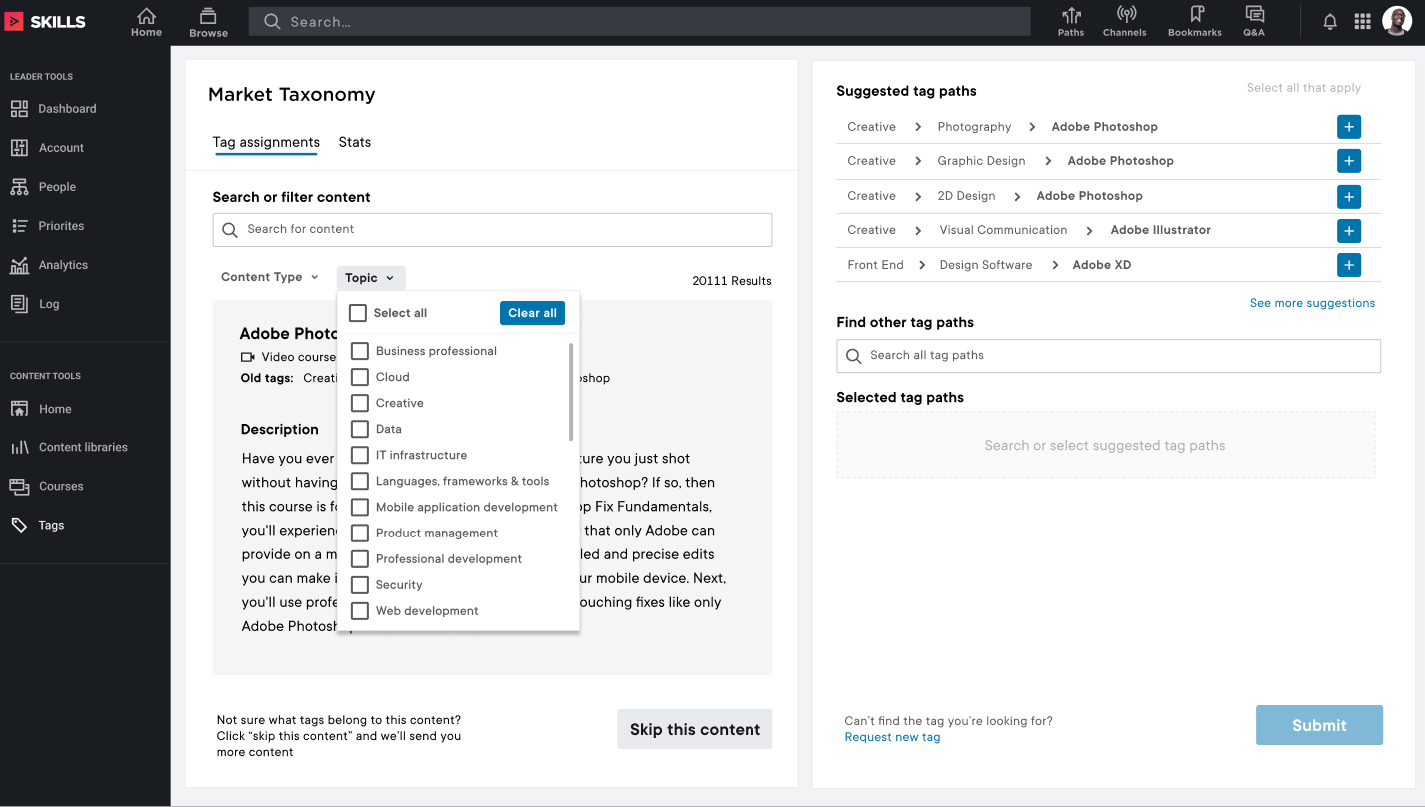
After I got an idea of layout and journeys for the users I started on the high fidelity designs for version of the tool to back-tag all content.
-
![]()
Tag Assignment Dashboard
-
![]()
Content type dropdown
-
![]()
Stats dashboard
-
![]()
Topic dropdown

Test
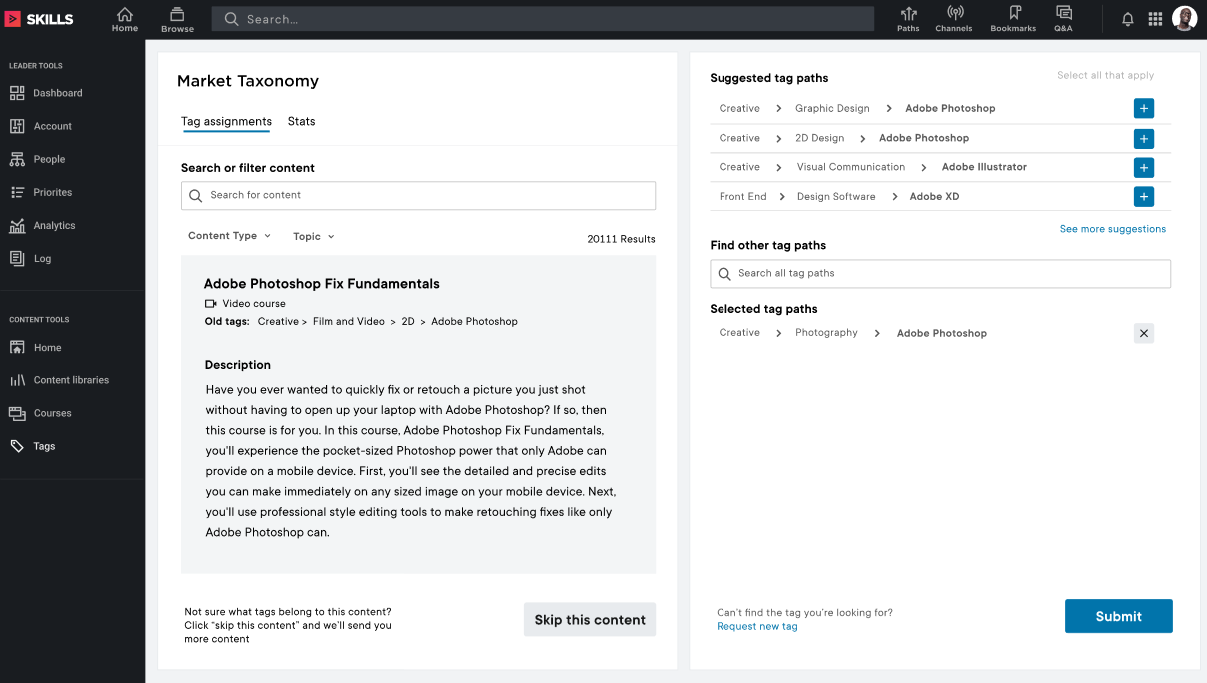
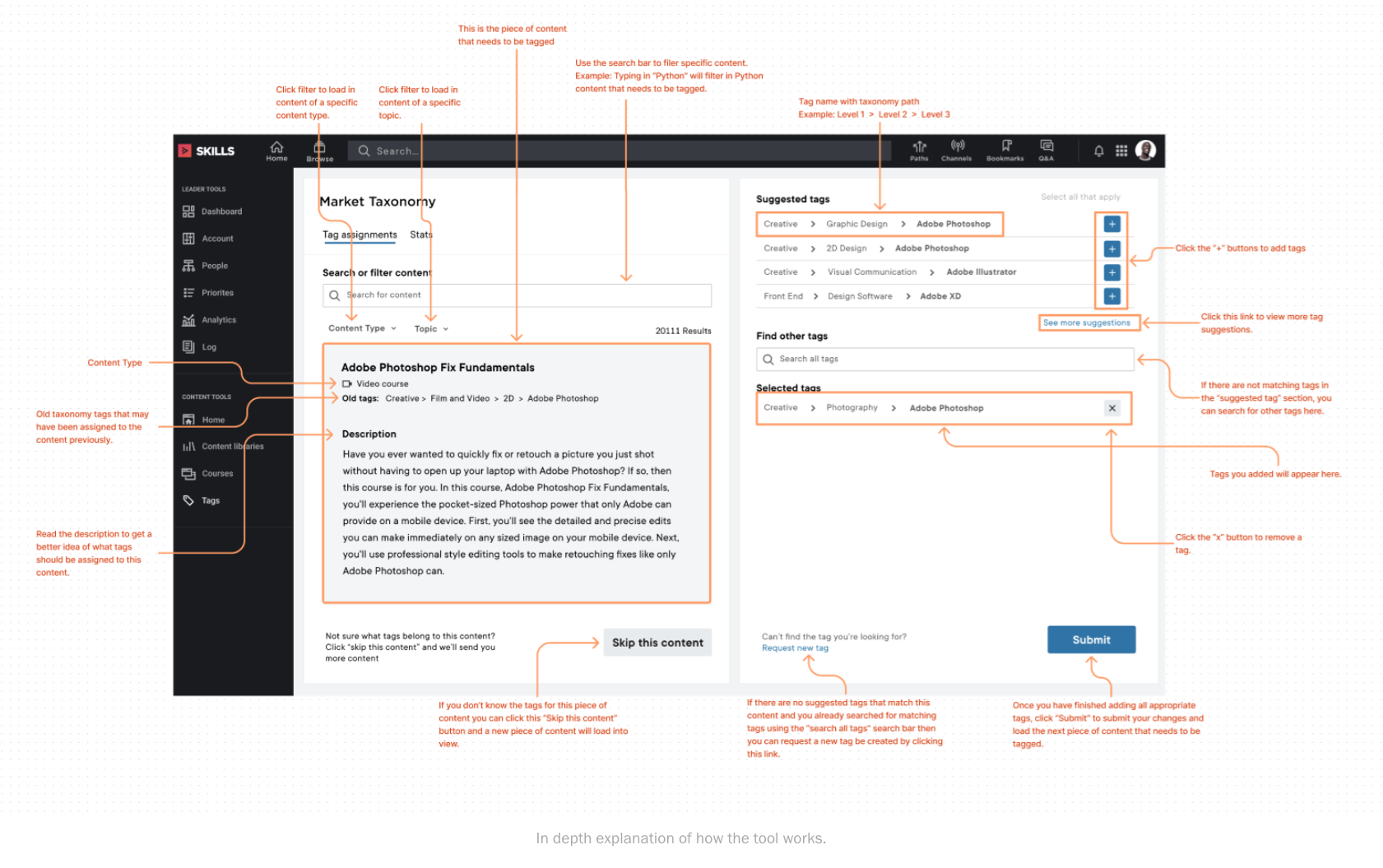
Once we had the first initial designs established, I created a prototype to test out the process of adding a tag for a piece of content and then created training documentation for the tagging event that we released to our internal users.
Reflection
The product took about a year to complete from start to finish. We released the final product and held a company wide event called a Tagathon and had over 100 people sign up to tag content throughout the company. We estimated it taking two full workdays to back-tag over 12,000 pieces of content.
Because of the extensive user research and continuing to iterate over my designs we successfully
tagged over 7,100 pieces of content in under 6 hours.
Increased tagging speed by +266% (old system: 444 per hour & new: 1,183 per hour)
Saved the company an estimated $40k
On top of that we did evaluative research and received a huge amount of positive feedback on how much fun it was to tag content.
We successfully created a fun, easy, and efficient way for users to not only back tag their existing content but their future content as well.